

Sourcing & Quality Standards
How apparel earns a place in the catalog
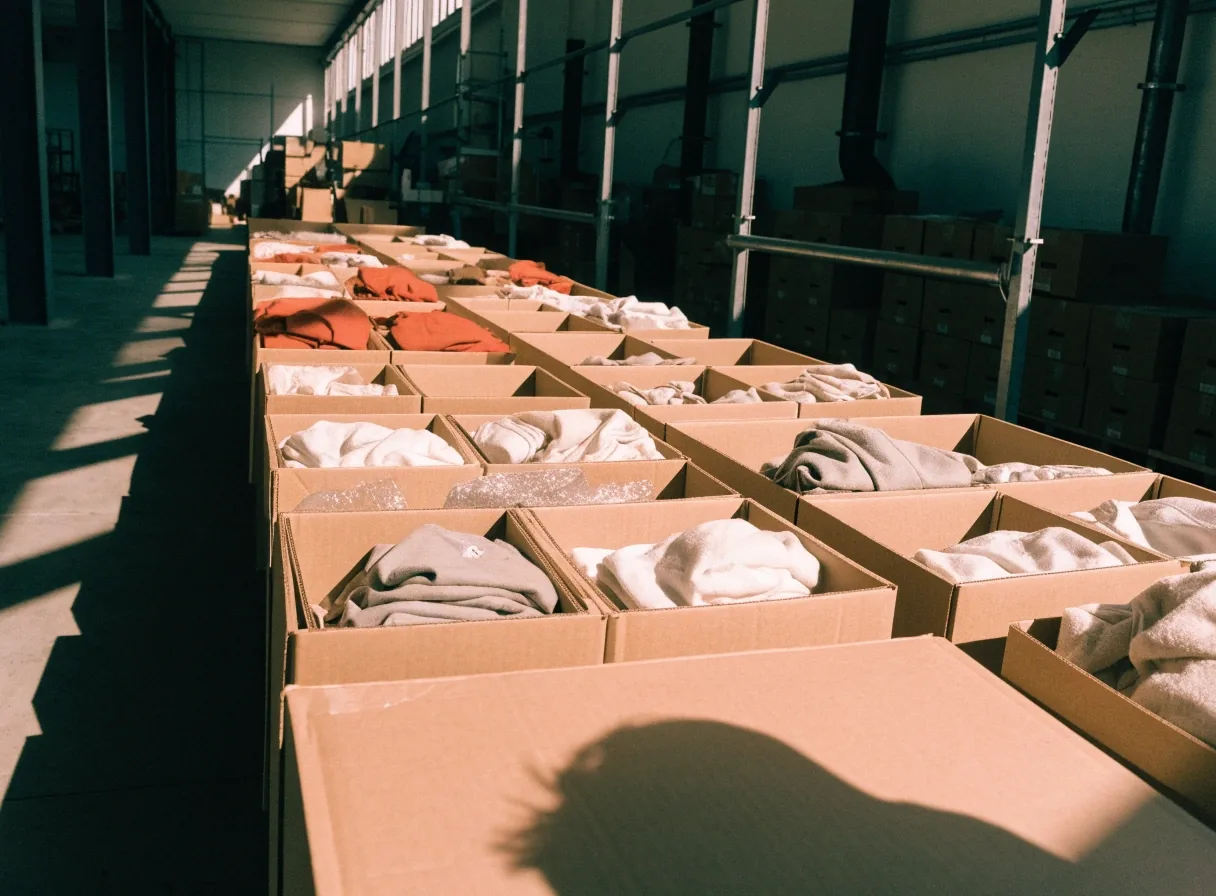
Every blank and carton accounted for, shelf to shipment.
Sourcing decisions decide whether a style sells, prints, or sits in a carton. Fabric, sizing consistency, and suitability for decoration or resale are checked before a style enters the catalog. This page explains how apparel is selected and checked so buyers can judge quality on evidence they can see and feel.
What we check first
The checks that decide the catalog
Open a row to see what the check looks like on the bench. Each one protects a buyer from paying for a run that does not print, fit, or sell.
Fabric Fabric first, because everything else follows Weight · hand · surface
Fabric weight, hand, and surface decide how a garment prints, drapes, and resells. A blank with a smooth, stable surface suits screen printing, while a softer hand may suit embroidery or direct sale. Buyers should handle a sample in the production size before committing to volume. Fabric questions are cheaper to ask at the sample stage than after a full run is packed.
Wholesale apparel quality standards start here: if the surface shifts under ink or thread, the decoration shifts with it. A quick hand test, a wash, and a test print tell a buyer more than a spec sheet alone.
Sizing Sizing consistency across a run Shoulder · chest · length
Consistent sizing means a size large in one color matches a size large in the next color. Shoulder, chest, and length are checked across the run because small differences break print placements and retail fit. Buyers who print multi-size jobs feel grading errors immediately. A distributor that checks grading before catalog listing protects both the buyer and its own repeat business.
That is the practical meaning of consistent sizing wholesale: the same label, the same measurements, color after color, so a decorator can set a placement once and trust it across the order.
Decoration Suitability for decoration Ink · thread · shrinkage
Decoration-ready apparel needs a surface that accepts ink or thread without shifting or cracking. Shrinkage behavior after washing matters for customer satisfaction after the sale. Buyers should ask about fabric content and any pre-shrunk treatment the manufacturer states. Royal Apparel markets Made in the USA garments including t-shirts, pullovers, polo shirts, and fleece wear, which shows how origin and category shape a wholesale offer.
Blank apparel quality check, in plain terms: can the blank take a print, hold it after washing, and keep its size? If the answer is unclear on a sample, it will still be unclear on a pallet.
- Ask what the fabric content is, and what treatment the manufacturer states.
- Test ink or thread on a sample before a volume run.
- Wash the test unit and check shrinkage and surface cracking.
Resale Suitability for direct resale Silhouette · seams · packing
Resale-ready fashion needs a current silhouette, clean finishing, and a size run that can be sold through. Buyers should check seams, labels, and packing quality on a sample before a seasonal buy. Boutique wholesalers such as Grace + Emma Wholesale focus on women's apparel with tight curation, which is one way to reduce resale risk. A direct distributor can apply the same discipline to trend-led styles.
A style that arrives damp, poorly packed, or with weak finishing loses value before it reaches a rack. Packing quality is part of quality, not an afterthought.
Before a seasonal buy, handle the sample and check three things a customer sees first: how the seams sit, how the label is finished, and how the garment is packed. If those pass, the silhouette and size run can do the rest of the work.

How buyers evaluate quality
Handle it, measure it, test it
Experienced users evaluate quality by handling a sample, checking measurements, and washing or printing a test unit. They ask about fabric content, grading, and whether the same style repeats across seasons. They also ask about carton packing, because damaged or damp goods lose value before they reach a rack. The catalog and ordering pages give buyers a place to ask those questions style by style.
Sourcing wholesale clothing is a series of small checks that add up to trust. A buyer who can see the check — a sample handled, a measurement taken, a carton opened — does not have to take the catalog on faith.

Brand and distribution
Who supplies a style shapes what you can buy
Brand ownership and distribution arrangements affect which styles are available through which supplier. S&S Activewear announced in 2025 as the exclusive wholesale distributor for American Apparel in the U.S. imprintables market. Gildan entered that arrangement for American Apparel, which changed how decorators source those basics. Buyers who understand that structure ask authorized reseller questions with more precision.
Imprintables quality is not only fabric and grading. It is also knowing which supplier can actually ship the style, in the sizes and colors a job requires, season after season.
Distribution & Fulfillment
What gets excluded from the catalog
Styles with inconsistent grading, weak finishing, or unclear fabric content do not earn a place in a wholesale catalog. A distributor that lists everything leaves the buyer to do all the filtering. Filtering at the sourcing stage is the service. Buyers should feel free to ask why a style is or is not carried, because the answer reveals the standard behind the catalog.
Samples
Samples as a practical standard
A sample in the exact size and color planned for production is the most practical quality check available. Printers can test ink and placement, retailers can test fit and hand, and private label buyers can test label and packaging. Samples cost little compared with a bulk run that misses the mark. The contact page is the place to ask about sample availability for a specific style.
- PrintersTest ink and placement in the production size.
- RetailersTest fit and hand before a seasonal buy.
- Private labelTest label and packaging on the finished garment.
BOND OF BROTHERHOOD, INC
14114 Rosecrans Ave, Santa Fe Springs, CA 90670
[email protected] · +1 (562) 826-0260
Monday to Friday, 9:00 AM to 6:00 PM