
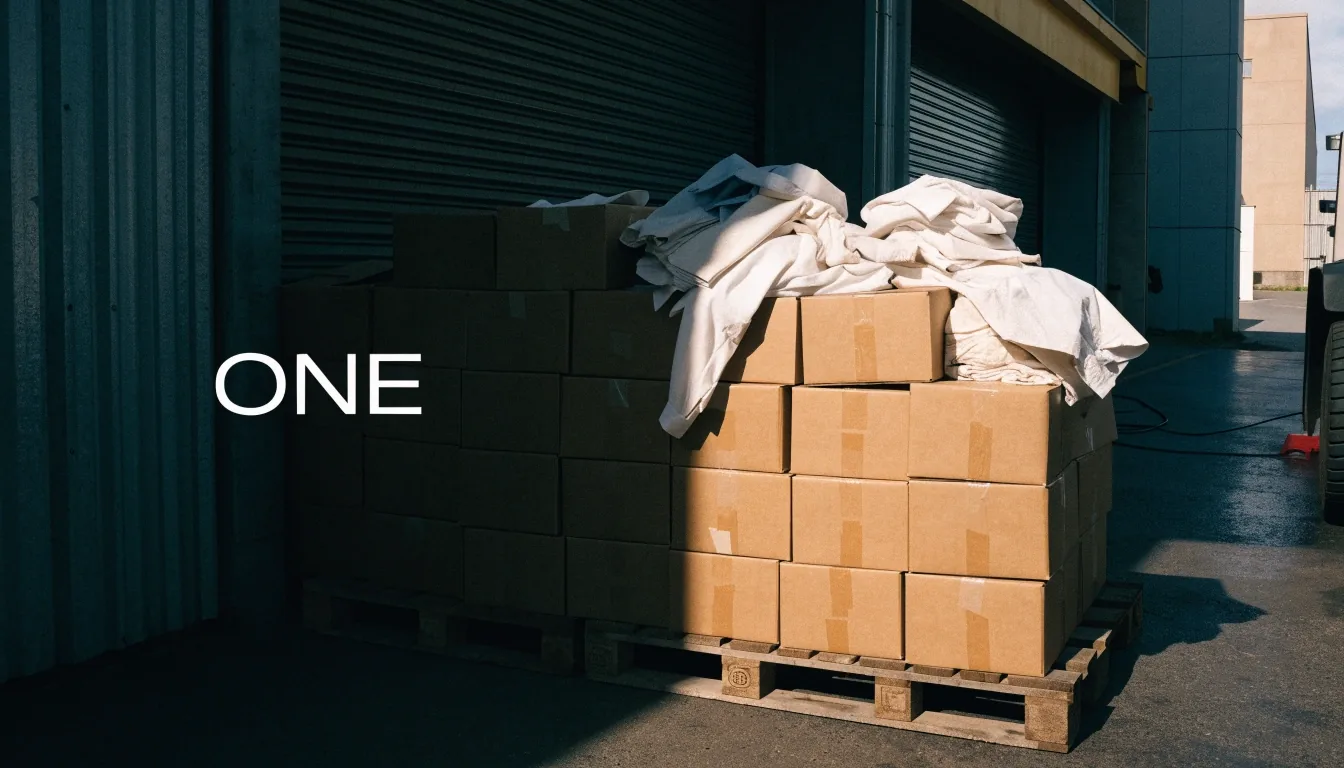
Distribution & Fulfillment
Every blank and carton accounted for
Shelf to shipment, each style, size and color has a fixed place, a count, and a check before the carton closes.
How a California distribution center ships apparel
Buyers judge a distributor by what arrives at the dock. Stock position, pick accuracy and packing decide whether a shipment can go straight to a rack or onto a print press. This page explains how inventory is stocked, picked, packed and shipped so a buyer can plan delivery with clear expectations.
The bench, in order
Stocking, picking and the check before sealing
Open a row to see the carton work behind it. The same three questions run through every shipment: where is it, is it right, and is it packed to arrive flat and dry.
Stocking by style, size and color Fixed locations, honest counts
Good stocking starts with a grid a picker can read at speed. Each style, size and color gets a fixed location so counts stay honest. Cartons are labeled so a partial size run does not get buried behind a full one. That grid is the practical side of a packing-bench tally board, where every blank has a cell and every carton has a count.
For a wholesale clothing distribution center, the benefit is simple: when a buyer asks what is in stock, the answer comes from the location, not from memory. A full size run stays visible, a broken run is marked as broken, and replenishment goes back to the same cell instead of a new one that nobody can find later.

Picking without the usual errors Style, size and color in full
Pick errors usually come from similar styles in adjacent locations or from colors that look alike under warehouse light. A pick list that names style, size and color in full reduces confusion. Checking carton contents against the pick list before sealing catches most mistakes at the bench.
Buyers should ask how split cases and broken size runs are handled, because that is where errors hide. A split case needs its own count, and a broken run needs a note on the shipment, so the buyer knows at the dock whether to expect the rest or to plan a follow-up.
At the bench
- Read the full style, size and color before reaching for a carton.
- Match the contents to the pick list before sealing, not after.
- Mark split cases and broken runs so the count travels with the carton.
Packing that protects folded apparel Flat, dry, labeled outside
Folded apparel degrades when cartons are overfilled, damp or crushed in transit. Packing should keep garments flat, separate from moisture and labeled on the outside. Poly bags and carton seals matter for resale-ready fashion more than for blanks, but both benefit from dry handling.
A buyer receiving fashion styles should inspect packing on arrival and note damage before accepting the shipment. That note, made at the dock while the driver is still there, is what turns a freight claim from an argument into a record.
On arrival, check
Carton seals intact, garments flat, no damp or crushed corners, outside labels matching the manifest inside. Note any damage before signing.

Fulfillment, verified once
Order checks before a carton closes
Before a carton closes, the contents should match the order line by line. Style numbers, sizes, colors and counts are checked against the pick list. Labels on the outside should match the manifest inside. That final check takes minutes and prevents the most expensive kind of error, which is a correct shipment to the wrong address or a wrong shipment to the right one.
- Style, size, color and count against the pick list — nobody seals from memory.
- Outside labels matched to the manifest inside the carton.
- Delivery address confirmed before the carrier label is printed.

In-stock reliability in practice
The size run promised is the size run packed
In-stock reliability means the size run promised is the size run packed. Partial shipments happen when a color sold out faster than expected, and the buyer should know how backorders are handled. Clear communication about what is in stock, what is short and what ships next beats silence. That is why the contact page asks buyers to name exact styles and sizes.
Carrier choice and delivery planning
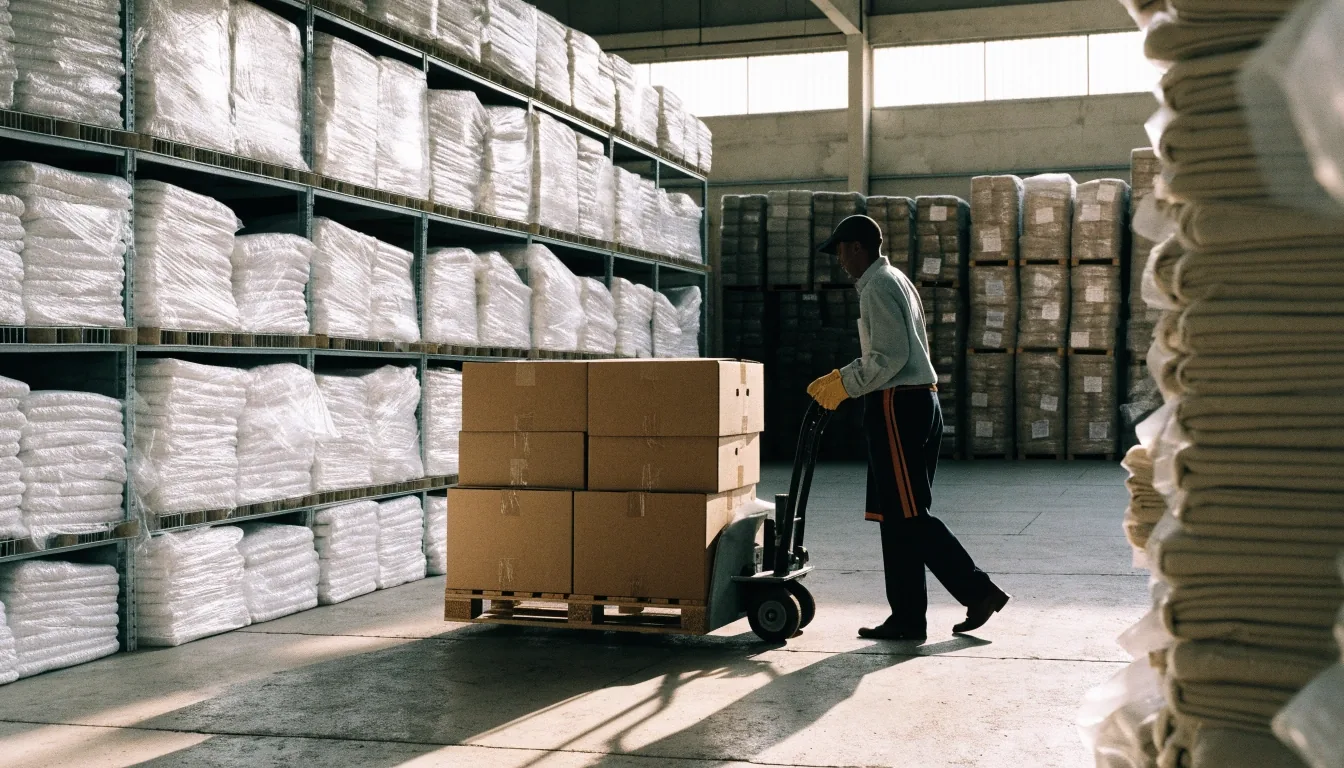
Parcel carriers suit smaller mixed orders, while freight suits pallet quantities and store replenishment. Delivery planning starts with the buyer's date, not with the warehouse date. A store opening, a print deadline and a seasonal drop each need a different buffer. Buyers should confirm carrier service, delivery address and any appointment needs before the order is packed.
California base, national shipment
A distribution center in Santa Fe Springs can serve Southern California buyers with shorter transit and ship nationally through carriers. SanMar operates eight distribution centers nationwide, which shows how location spread affects shipping range. A single-location distributor competes on proximity, communication and careful packing for its service area. Buyers outside California should confirm transit time for their delivery address.
Before the carrier arrives
What buyers should confirm before shipping
Buyers should confirm the delivery address, contact name, receiving hours and any liftgate or appointment requirement. They should also confirm how freight charges are handled and whether a signature is required. The ordering guide walks through the information a buyer needs ready before an order moves to packing. Prepared buyers get cleaner shipments.
- Delivery address and receiving contact name
- Receiving hours, liftgate and appointment needs
- Carrier service, freight charges and signature requirement
- Exact styles, sizes and colors for the count
14114 Rosecrans Ave, Santa Fe Springs, CA 90670
Monday to Friday, 9:00 AM to 6:00 PM
+1 (562) 826-0260 · [email protected]